Initiatives
Title
48 Initiatives
Ongoing
Swiss MOOC Service
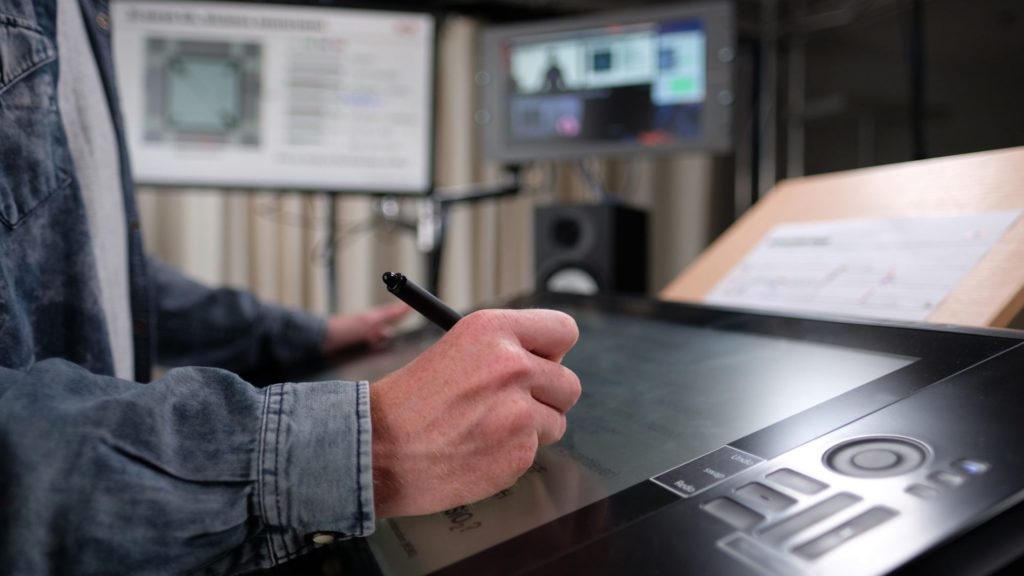
100% hosted in Switzerland, the Swiss MOOC Service was built to serve public institutions and allow easy distribution of MOOCs.
Ongoing
Interface With Schools
Bring together national and international partners around the missions of EPFL, support our current and future Bachelor, Master, and PhD students in their choices and ambitions, ensure good visibility of the programs offered by the School, and act proactively to ensure a smooth transition from secondary education to EPFL.

Ongoing
R2T2: Collaborative Telerobotics Missions
Join a unique experience where up to 80 students from around the world collaborate remotely to control 16 Thymio robots. Together, they have three hours to coordinate their efforts and repair a damaged power plant on Mars!

Ongoing
Campus Analytics
Data science for education. We aim at using the power of machine learning and data science to uncover hidden patterns and paths in EPFL’s educational system.

Ongoing
MOOC Factory
In the span of a single decade, EPFL has produced more than 140 courses that have attracted 3’000’000 registrations. We now look at leveraging video resources produced in 2020.

Ongoing
Cellulo
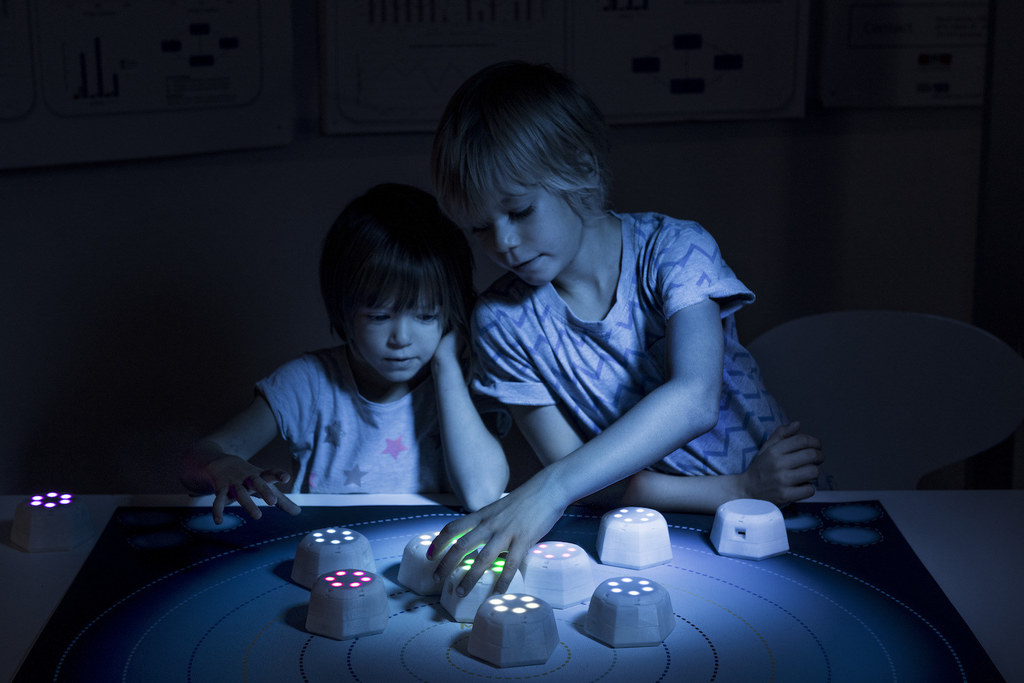
Cellulo robots make abstract aspects of learning concrete, and act as intermediaries, facilitating and enriching educational activities.
Ongoing
Workshops for teachers and Doctoral Assistants
Our online and on campus workshops address the typical range of university teaching activities.

Ongoing
MOOC: discovering digital sciences with Thymio
This course covers the basic mechanisms of an educational robot such as Thymio, its programming using different languages, and its use in the classroom with associated pedagogical elements.

Ongoing
National Research Programme (NRP77): Assessing computational thinking skills
Computational thinking (CT) is the ability to develop a problem-solving methodology that complements computers. This project studies the extent to which Swiss students are able to do so, and develops tools to measure these skills.

Ongoing
Research on Education in Times of Covid-19
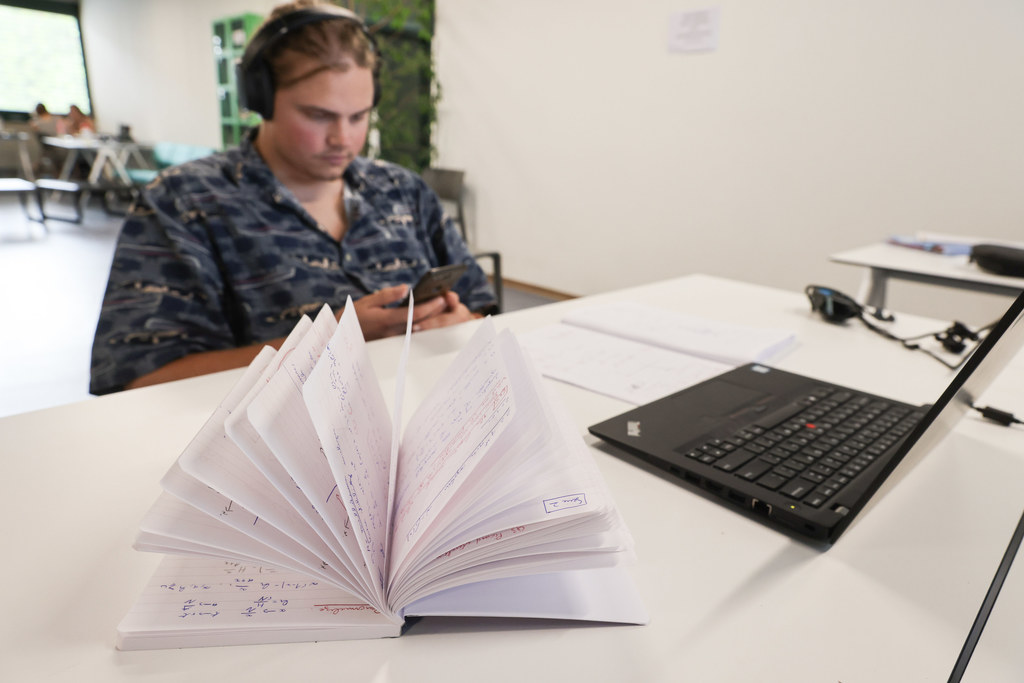
How does distance teaching during lockdown affect students and teachers? How can we collect the evidence in order to inform decision-makers?
Ongoing
iHub4Schools
Accelerating digital innovation in schools through Regional Innovation Hubs and a whole-school mentoring model.

Ongoing
lunch&LEARN
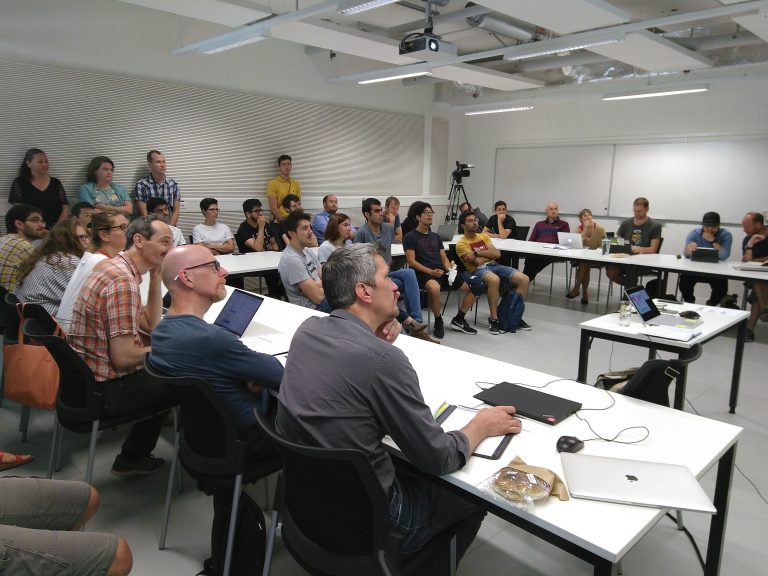
The aim of Lunch&LEARN sessions is to gather an EPFL audience interested in novel and effective learning and teaching approaches, and to create a rich discussion around successful paradigms based on evidence. Do join us!
Ongoing
PharmaSIM
Interactive Learning environments for pharmacy assistants can encourage the students to test their knowledge in consultation situations without the fear of making mistakes.
Additionally, these environments can be used to collect meaningful data to analyze student’s behaviors and provide exclusive insights to teachers.
Additionally, these environments can be used to collect meaningful data to analyze student’s behaviors and provide exclusive insights to teachers.

Ongoing
Teaching in times of covid-19
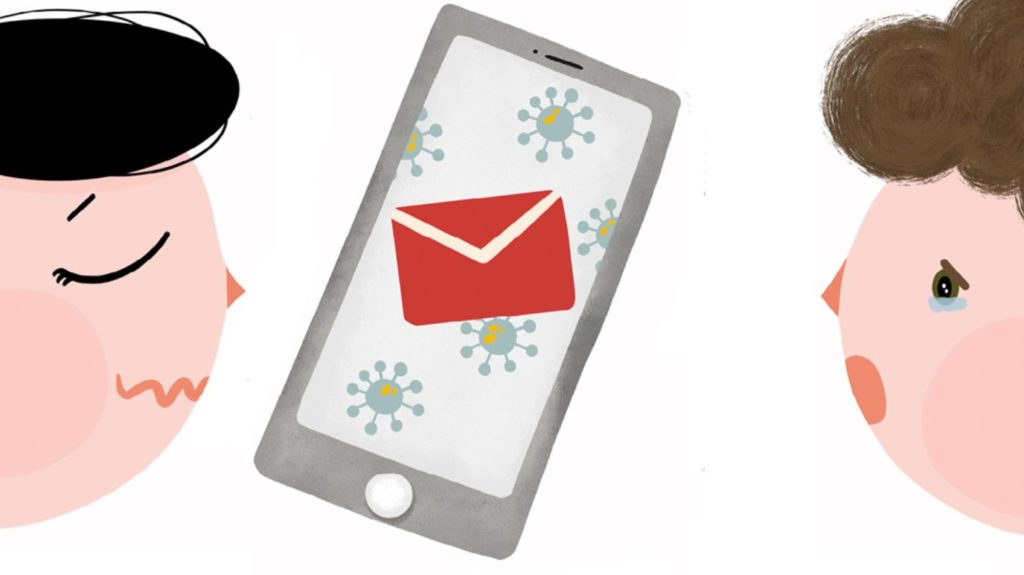
The LEARN teams supported EPFL teachers and primary school educators in implementing and adapting distance and hybrid teaching in the unexpected and imposed context of the COVID-19 pandemic lockdown.
Ongoing
Jupyter Notebooks
Computational thinking in practice. We offer easy access to Jupyter Notebooks for students, and support instructors on the best designs and use in class.

Ongoing
Swiss Digital Skills Academy
Open Educational Resources (OERs) and Open Educational Platforms (OEPs) are playing a key role in strengthening digitalization in higher education. Up to now, their development and deployment have been mainly carried out by IT services and media experts.
The creation of a Swiss Digital Skills Academy is enabling and empowering professors and educators in higher education institutions, as well as HEP/PH students to take control of and to fully adopt their digital ecosystem in their educational practices.
The creation of a Swiss Digital Skills Academy is enabling and empowering professors and educators in higher education institutions, as well as HEP/PH students to take control of and to fully adopt their digital ecosystem in their educational practices.